
The Subject of the Article
- Material-specific polishing is crucial for the long-term stability and esthetics of CAD/CAM restorations.
- Polished surfaces have been proven to reduce antagonist wear and plaque build-up.
- Each material - zirconium oxide, lithium disilicate, hybrid materials - requires customized polishing protocols.
- Scientifically developed polishing systems achieve reproducible high luster results.
➤ In Part 2 of our polishing guide, you will learn more about the scientifically proven advantages of polishing CAD/CAM restorations
Monolithic CAD/CAM restorations made of zirconium oxide, lithium disilicate or hybrid materials are well established in dental offices and dental laboratories. They can be efficiently fabricated and are characterized by high aesthetics and durability. However, without veneering, a new challenge has come into focus: how to achieve the optimum surface finish and polish.

Why polishing is more than aesthetics
Once the CAD/CAM crown has been milled or ground and the fit is perfect, time is pressing. Dental polishing as the final step is often carried out under time constraints. But this step is more than just a cosmetic finishing touch. Material-specific polishing reduces plaque build-up, minimizes antagonist abrasion and increases the restorations' lifespan.
Renfert has identified this challenge and developed a series of material-specific polishing pastes. There is a suitable polishing paste for each material, whether zirconium oxide, lithium disilicate or hybrid materials. In this article, you will find out why choosing the right polishing is essential, what material-specific challenges there are and how you can achieve optimum results using the best techniques.
Polishing for durability and stability
A perfectly polished surface will not only enhance the esthetics but also the mechanical properties of a restoration.
Well-polished for antagonist protection
"Does monolithic zirconium oxide cause abrasion to the opposing tooth?" Many people share this concern. Numerous studies have proven, however, that optimally polished, smooth surfaces cause less abrasion to natural tooth enamel. This is particularly relevant for zirconium oxide: an optimized surface finish provides better protection to the opposing tooth than a glazed surface. When using glaze material, prior polishing is strongly recommended. This is because glaze layers can wear off. A previously polished surface reduces antagonist wear, even if the glaze layer is partially lost.
Less plaque, more health
Surface roughness also plays a decisive role in plaque accumulation. Carefully polished restorations show significantly less biofilm formation compared to rougher surfaces. Besides having a positive effect on esthetics due to less staining, this also creates optimal conditions for healthy soft tissue in the area. A smooth surface supports biological integration and reduces the risk of inflammation.
Natural esthetics thanks to genuine high gloss
A carefully polished restoration achieves gloss values of over 85 GU (Gloss Units) - comparable to a tooth's natural gloss under a saliva film. This “real” high luster confers a natural appearance to the restoration and significantly improves light reflection. In contrast, superficial gloss effects provided by oils, waxes, glazes or gloss varnishes are temporary and subject to wear. Effective high luster polishing is essential for all materials to ensure harmonious integration into the remaining dentition and a durable high-quality surface finish.

The right polishing for each material: this is how it works!
There is an impressive variety of CAD/CAM materials. However, each material has specific polishing requirements. Find out the most important factors for the major material groups.

Zirconium oxide
Zirconium oxide has evolved into a versatile material. Especially translucent variants offer highly esthetic characteristics and are therefore predestined for monolithic restorations.
Polishing protocol for zirconium oxide
Pre-polishing:
- Use a Silicone polisher (Renfert)
- Work at a low speed (approx. 10,000 - 15,000 rpm)
- Apply low contact pressure to avoid heat build-up
Note: Heat in combination with mechanical pressure can lead to a localized overheating of zirconium oxide. This results in surface flaws such as microcracks, which increase the fracture risk in clinical use.
High luster polish:
- Use the Renfert Polish ZrO₂ diamond polishing paste
- Polish with a Bison polishing brush (Renfert/ diameter 18 mm) at 12,000 - 15,000 rpm
Important: Polishing the occlusal surfaces is crucial, as insufficiently polished occlusal surfaces can lead to abrasion on the antagonist.
Lithium disilicate
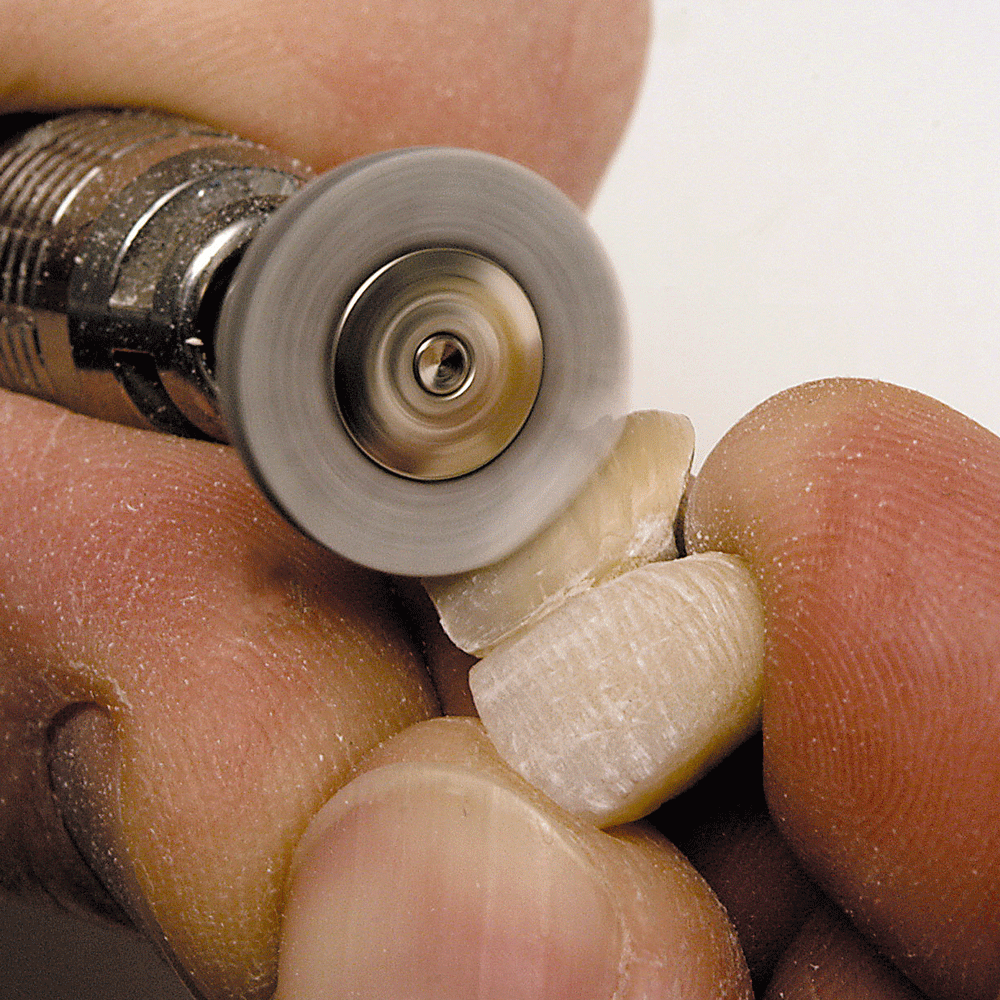
Lithium disilicate and zirconia-reinforced lithium silicate ceramic (ZLS) combine high strength with outstanding esthetic properties - ideal properties for sophisticated single-tooth restorations in the front and lateral areas. Their polishing is somewhat less demanding compared to zirconium oxide but is nevertheless important for the result.
Polishing protocol for lithium disilicate
Pre-polishing:
- Use a Renfert Silicone Polisher at 10,000 - 12,000 rpm
- Avoid overheating
Important: Lithium disilicate reacts to thermal stress: Strong exposure to heat or abrupt temperature variations during processing can lead to stresses in the microstructure and cause microcracks or fractures. Gentle, temperature-controlled processing is therefore essential for the material integrity and longevity of the restoration.
High luster polish:
- Use Renfert Polish LiSi₂ with a Bison polishing brush (Renfert, diameter 18 mm)
- Work at 10,000 - 12,000 rpm
- Ensure an even polish of the occlusal surfaces
Note: Uniform polishing of occlusal surfaces is important with lithium disilicate, as it promotes natural light reflection and reduces functional wear. Unpolished or unevenly finished areas can lead to local overloading, increased plaque build-up and higher abrasion risk on antagonists.
Hybrid materials
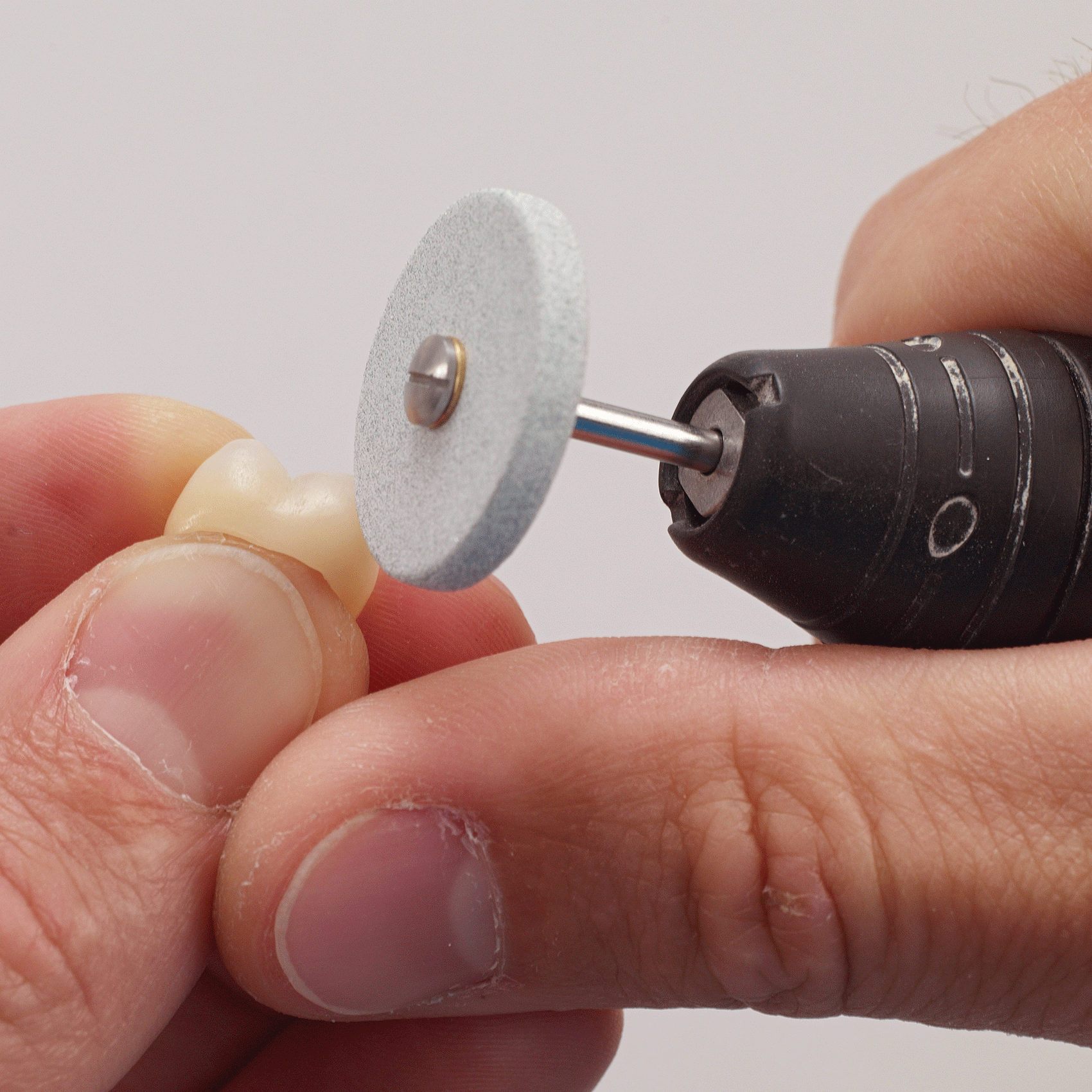
Hybrid materials such as VITA ENAMIC, GC CERASMART or 3M Lava Ultimate combine the characteristics of two material groups. This ceramic-polymer matrix exhibits a high load-bearing capacity, good abrasion behavior and at the same time reduced brittleness. This combination, however, presents challenges in terms of finishing. Conventional polishing pastes or instruments often reach their limits as they are either too abrasive for the polymer components or too ineffective for the ceramic components.
Special polishing systems designed for hybrid materials ensure that both components are evenly polished.
The challenge with hybrid materials
- Inhomogeneous material ratio: different proportions of ceramic and composite components with varying degrees of hardness and divergent material removal make uniform processing difficult.
- Manufacturer- specific material composition: The individual composition of hybrid materials varies considerably depending on the manufacturer, thus preventing standardized process control.
Tip: Hybrid materials should be taken into consideration for bruxism patients who are at risk of fracturing ceramic restorations.
Polishing protocol for hybrid materials
Pre-polishing:
- Use material-specific silicone polishers (Renfert) within a processing speed range of 5,000 to 12,000 rpm, depending on the material composition and geometry of the workpiece
- Carefully remove all processing marks, especially grinding or milling grooves
High luster polish:
- Use suitable polishing agents, e.g. Renfert Polish hybrid materials
- Use Bison brushes (Renfert/ diameter 18 mm) for polishing complex geometries
High performance CAD/CAM resins (PEEK, PMMA, composites)
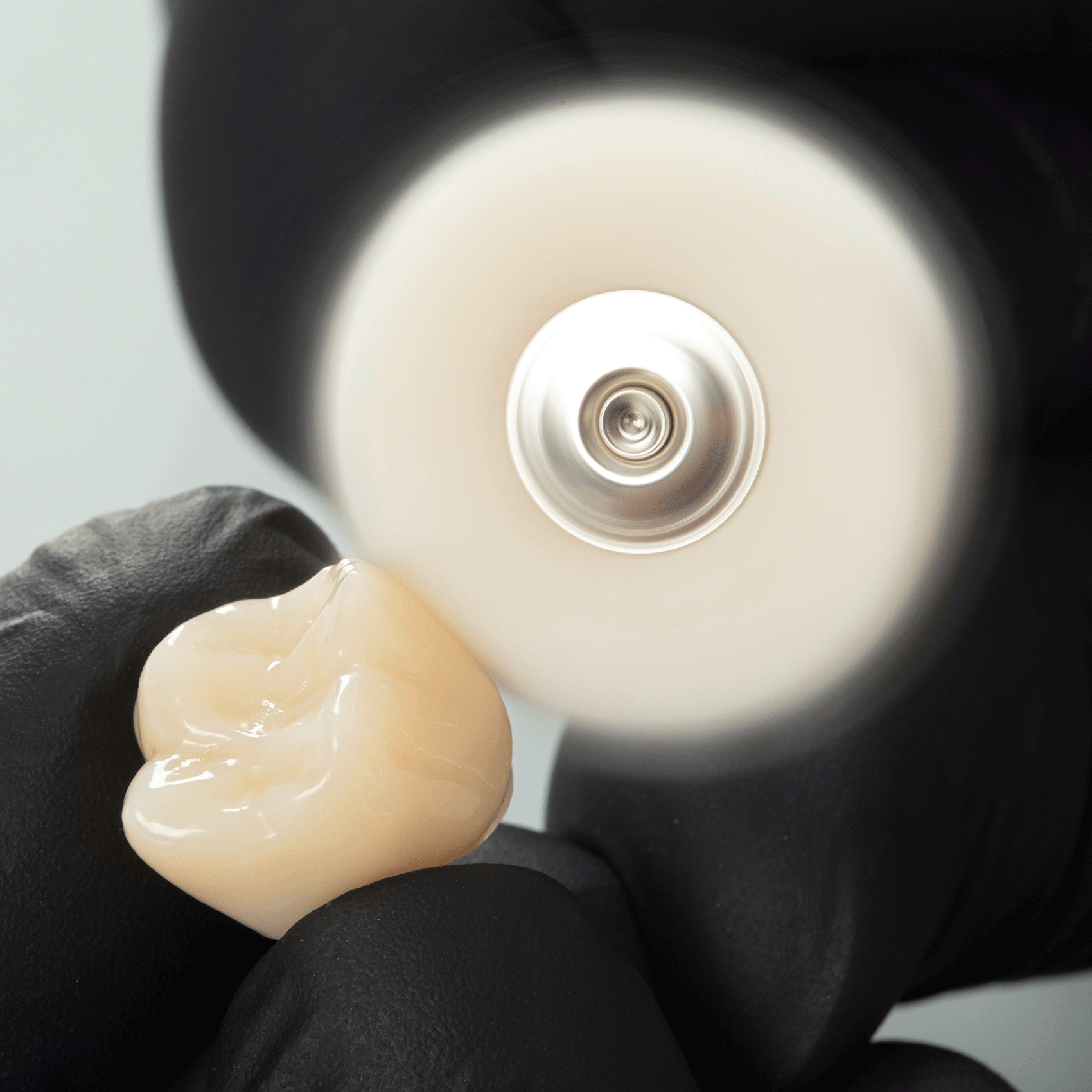
CAD/CAM resins also require specific polishing protocols. As a rule, polishability is better than with ceramics and comparable with conventional composites, while industrial pre-polymerization of CAD/CAM materials ensures an even smoother surface.
Polishing protocol for high-performance resins:
Pre-polishing:
- Use a suitable silicone polisher
Intermediate step:
- Polish with a Bison brush (Renfert/ diameter 18 mm) at 5,000 - 10,000 rpm, and a suitable polishing paste (see manufacturer's instructions)
High luster polish:
- Use a woolen buff with a small amount of polishing paste at 5,000 - 10,000 rpm; Opal L is particularly suitable for veneering resins, Renfert Universal Polishing Paste is recommended for PMMA.
Find out more in the next part!
➤ Continue to Part 2 of our polishing guide. Learn more about the scientifically proven benefits of polishing CAD/CAM restorations, for example.


