
Digital transformation has firmly taken hold in dental offices. Provisional restorations are among the areas benefiting most from new technologies such as 3D filament printing. In this blog article, based on an interview with Dr. Lina Karnesi from Radolfzell, we show how this method integrates seamlessly into a digital dentistry workflow and what advantages it offers for dentists and their teams.
Why digital temporaries and filament printing matter
When it comes to temporary restorations, dental offices often face the same challenges: time pressure, additional manual steps, and economic uncertainty. Digital fabrication provides noticeable relief. With 3D filament printing, temporary restorations can be produced directly in the dental office, cleanly, reliably, and without extensive post‑processing. This saves time, reduces costs, and prevents unnecessary extra appointments for patients.

Filament printing as the logical addition to the digital workflow
Integrating filament printing into the existing CAD/CAM workflow opens up new possibilities: temporaries are produced chairside, right during treatment. The system runs in the background while the clinical team focuses on patient care. As a result, workflows become more efficient and patient care more flexible.
The challenge and the path to the solution
The biggest challenge often lies in ensuring a smooth process: How can temporary restorations be fabricated without additional work steps and chemicals? According to Dr. Karnesi the Renfert filament printer delivers outstanding performance in this regard — no odor, no cleaning processes, and hardly any manual post-processing. The temporary comes out of the printer essentially ready to use.
Step by step guide for successful implementation in your office
- Perform a digital scan of the patient
- Design the temporary restoration in your CAD software (e.g., exocad)
- Send the file to SIMPLEX Sliceware and start printing
- Let the printer run in the background while the treatment is taking place
- Lightly polish the temporary after printing and seat it


What Dr. Lina Karnesi says
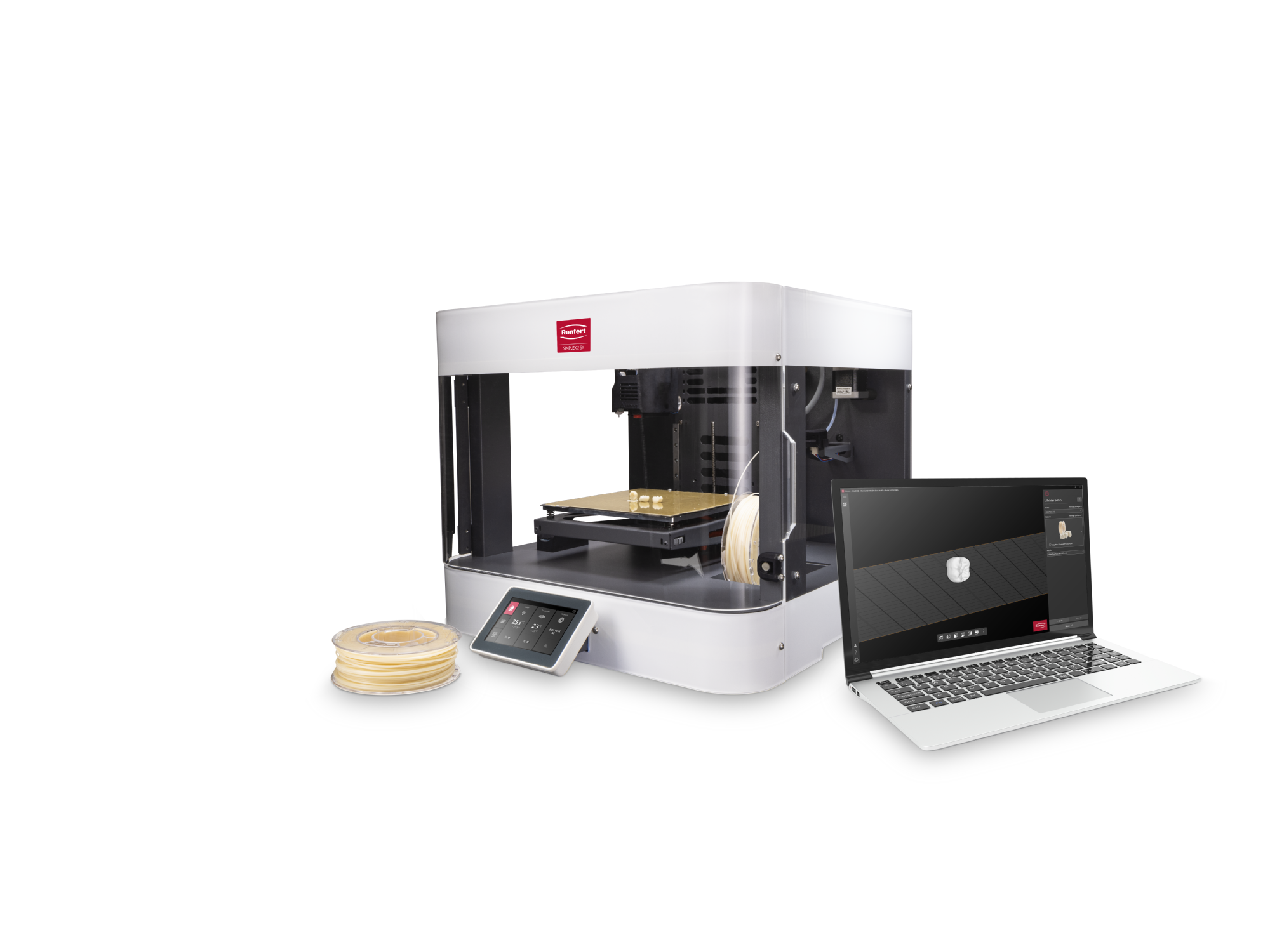
Would you like to learn more? The full interview with Dr. Lina Karnesi offers additional practical insights and real‑world experiences with 3D filament printing in dentistry.
- Interview available soon. -


